Wednesday, April 29, 2020
The day after the supervision before.
These are the very small cigarettes that Mark Wallenger fashioned at Cabanas in Sheffield when I tried to blag a fag from him. At art school we used to call these prison rollys - when we tried to role the dust from the bottom of a number of packets of Golden Virginia found deep in draws and pockets. I wrote about meeting Wallenger in the first proper piece of writing for my PhD. The first bit I thought was getting somewhere. The somewhere it got was to land in the middle of practice and research and hold a space for a glimpse, I say this rather than a moment as it fits in sideways better.
Sharing was difficult, critique was easy. Is this a lesson that when something is put forward for critique there needs to be a level of investment that allows for water to flow from a ducks back? people who live in ponds should not throw stones at ducks. The mixing of metaphors is always a problem and often useful as they stir up meaning and juxtaposepose thoughts and don't make a sense.
I think I had been having a good period of reading and thinking and writing. Today I watched Zizeck give one of his post Hegelian tyraids . I wondered why he had to be so difficult, clearly he is clever enough not to be so offensive to so many people with a valid position on what in civil society is acceptable behavior. Then I wondered if it was a test, is he saying to hear what I am saying you have to get past what I have said. I can only tell you this thing that is hard if you listen to a story about a fat young woman on the bus who would always lack the perfect body even if she had it, and then detailed description of images of his colon. I snapped back into listening to him when he said that true disgust is when what is on the inside comes to the outside- the inner body, the contents of the stomach - the unconscious and the subconscious on the pavement. This made sense of his objectionable behavior- not the showing of what is inside his filthy stories that he tells repeatedly but what is in the potential of knowing what disgusts us and where it lives in discussion.
The writing that I mention is in many ways disgusting - bringing the inside to the outside. It is more like a puking than a confession and holds a key problem. The problem is a wrenching up of a partially digested meal that nobody really wants to see; even if it does always contain carrots. Perhaps though this is the actual thing that needs to come up in the text acknowledging a as Zizeck says that making what is on the inside appear on the outside is disgusting.
My writing was an attempt to try and think about the idea of the artist within the research projects I have worked on. Not generally artists working in the myriad of ways artists work but me myself in the projects I work on. The disgusting bit is that a number of truths I have inplicitly being aware of are put on the outside. In the text they are guilded like the ghetto with a layer of gold but as a great man said you cannot polish a turd yet you can sprinkle a bit of glitter on it. The writing then in simple terms says -
Academics you have your research but you have your terrible legacies that you cannot bare to speak of. You have a disgusting need on the inside past down through your disciplines to not infect the places you work with your evil. You kill your fathers and rape your mothers and put out your eyes yet still you feel no relief. You cannot redeem yourselves yet there is still a compulsion to know. I suppose in a veiled way I was writing about artists doing the academics dirty work, bringing in a subjective and personal attentive affect - an apparatus of the event clearly desired but never spoken of - the discreet object petit a that always speaks to lack. The stitched on bollocks and ball sack as performative ritual after the castration. That is what Zizeck might say and then sniff and apologies. Educational research is a place where monkeys perform yet art is a place where they masturbate it is an inconvenient truth and personal joke with myself.
I am angry for no reason today. I am angry because I am stupid and thought that within the philosophy there is a quest for finding the meaning of everything "why are we here?" . But actually I am not reading or supposed to be reading to find the meaning of life or how to live without god or the nature of a speculative or material or constructed reality. I'm also not reading to disgust people with my insides I am reading for altogether more pragmatic reasons that I don't care about. This is a truth - perhaps not the truth.
I will cheer up but it is good to write something down - not cathartic but good to get something disgusting out.
Friday, April 24, 2020
Its all too much
The screen prints were made as part of a project called we are not an island. Its all too much was about spending time in Venice and the exhaustion of the eye and mind. But nothing lasts forever and there is an inevitable flow even if it lacks direction in this period of enforced contemplation.
This week I have mostly been reading and making art with Alice in the garden. I have enjoyed helping her realise her degree show, not her real degree show but a nice piece of work, a piece that breaths and this is all you can ask for really of a piece of work.
I have read about research creation with Kate Pahl, we have done notes together and pushed through our combined cynicism. We connect on cultural materialism. My gut feeling is that there is something in Raymond Williams essay Base and Superstructure that is really important but I can never get the important bit out of it however many times I try to read it.
I started the week reading Massumi and Manning thought in the act. First two chapters were a bit wonkey donkey but I quite enjoyed the way they made a proposition. Then the middle bit that actually had propositions and worked them through some lived experiences was like an overfilled club sandwich . The joy of Manning writing something that was grounded in a practice- that is understandable from where I stand made the fact there is a lot of guff to wade through just about bearable.
In a way I think they actually present research creation as the nomadic war machine or try to; they do this in style rather than substance. When I finished What is Philosophy I decided that Deleuze and Guattari had put some traps in the text. A trap street is a road that doesn't exist in the world that people who own maps use as a way to protect their copyright - if sombody copies it rather than does their own mapping then they can sue. There are also trap words in some dictionaries, made up words so you can check if somebody copies your lists. The end of What is Philosophy is like trap philosophy- they try and say something that your brain thinks is a solution but it is in fact a trap that if you have read the book properly lets you understand that actually it is not that simple - thought cannot be held in the act. To think so is to fall into the trap and become a copycat rather than stretch into new modes of thinking and doing. this is philosophy - the making of new concepts.
I then read Natalie Lovelaces manifesto for research creation and really enjoyed it but when I came to make notes on it I couldn't think what to write. There was a terrible chapter about Lacan and the gaze and it was hard to get past it. Earlier on there were some really interesting nuts and bolts that included research creations history and theory. I enjoyed the description of the boundary object and the introduction of Matter out of place from Mary Douglas. The book seemed really honest and located research creation within the academy as a type of hybrid activist research. This all flowed quite well although for someone who still feels outside the academy on the inside I did wonder why they didn't just move on. Was it the need for tenure and pedagogic drive to teach or was it holding the university up as something it never really was, aspired to be, or could become.
On a philosophical level it seems that people by this I mean researchers encounter much of this work from a methodological perspective - a what you do -rather than why you do it. So my two books this week are about research creation in Canada. Both take a thing they are unsure about ethically and aesthetically and reimagine it in all its potentials. Both involve working through and across disiplinary bounderies and both produce a diffused unfixed flow of what we have to call knowledge but only as its the closest word we have to what we are trying to say.
One takes as its ontological source Lacan and the other although not explicit, Deluezian. In the complexity of this post modern, post 68 imagining of ideas of how the world falls together there are fundamental contradictions Delueze is against Lacan this was written large in the publication of after Oedipus. Does this impact on people trying to do research creation? not really if you choose to ignore it but the confusion and lack of coherence means you are trying to critique research creation which is established from two very different positions. This is ok for Lacan with his petit object a and Big other. Its ok for Deleuze with his assemblage and rhizome and lack of a located subjective focal point . But it must be difficult for practitioners who want to dip into research creation as a methodology without grasping the 'why' question - why do we need it? what is it against ? and what does it do?
I tried to come to both text from a new materialist perspective. On the back of Barad as I had met her halfway and read her book and a peppering of Jane Bennett who's essential vitalism I struggle to see as anything else. But Deleurze and Lacan are not materialists, cultural ,new or dialectical. So there is not really a thread to follow. Massumi and Manning talk of flow and interference patterns and Loveless talks of rhymes and flows but they do not align with a material world that is more than human and constitutes an entangled world in the way Barad does with her science (royal) and Bennet does with her spiritual (psudo)
I finished the week by trying to go back to 1000 plateus - I found it much easier to read like I had past a threshold. I thinks its been a very constructive PhD week but its a slow process and I put a lot in and get only a little bit out the other side. I have found the section about the Gothic which is pure Ruskin- I wonder how many people have made this connection. I am not sure where I'm getting but its good to be held within an expanded field.
Tuesday, April 14, 2020
One and three chairs
Corona 19 isolation enters its fourth week. In terms of doing a PhD the enforced isolation which felt very cerebral for most of last year gets its real life realisation. I'm doing lots of systematic reading and balancing this with a plethora of odd jobs such as mending the garden chairs.
I had a thought this morning in my notes on how to make art at the end of the world by Natalie Loveless. Here goes - although research creation is in many ways seductive the art it talks about is very much located within the academy or art school. I do not come from a research institution that validates works of art in this context even though I see it as part of my tradition. I think I said in my notes that 'the spectator was not fully emancipated by an unfair distribution of the sensible.' To reference Rancierre to myself obliquely in my notes shows how far I've come but how little I have really traveled.
My thought for today which is tentative and emerging from the miasmas of thinking and reading is that the research creation in action as presented by Loveless is not particularly new materialist in its ontology. Loveless talks of Boundary Objects and matter out of place and trandisciplinary research. I like all these ideas but the feminism or feminist edge of this writing although drawing on Harraway finds itself in ideas of Eros and Care rather than universal ontological entanglements that emerge from Barad. Basically the discipline of art is working within an expanded field and part of this field enfolds research. She describes multiple outcomes in different forms and places well. The boundary object is good here - it makes sense of lots of things I do.
She also gets around the problem of Shart or shit art by saying the art is not really art - its something between art and research so shouldn't be seen within the same category of art proper. This doesn't feel like an excuse just an explanation of what is happening. So for example if the research creation object/subject of study is a way of communicating more fully with neuro divergent young people then it is within this frame of influence or audience that this thing/object/work should be considered - not a gallery or an art mag but within the expanded field of Art/research. I liked this approach and it made sense of things.
The thing I thought of next was who is working within Research Creation from a clear and acknowledged new materialist perspective. I have been suspicious from the start that much contemporary art/ art school practice does not align with some of the central ontologies of the New materialism especially those drawing on Barads agential realist ontology. We slip in a bit of love and desire and we locate this in the human body where it is most often located.
I am not sure if Manning and Massumi are new materialists at all. They are essentially Deleuzian who was I think in some ways a vitalist, at the very least a philosopher of life and becoming - he presents a life force not located within an individual . The distinction between the Deleuzian assemblage and Barads Phenomena is that one has the potential of an outside in a very complex entanglement with the immanent becoming where the other denies the ontological possibility of an outside or an - external to. Barad is harder to draw into the artistic creative tradition - or method.
My literature review and method could be drawn together by taking a new materialist approach to research creation that begins within the expanded field of Sculpture - I'm going to google that now as I've not read much about this ontological issue yet.
Wednesday, April 8, 2020
Corona Virus in the Onions
Nearly 3 weeks into lockdown and I think things are going OK. Its really good to be able to read for my PhD it feels like I'm accomplishing something I wasn't doing before. Well I did for a couple of months, in the stress of the RD2 rights of passage but since then I was a bit dipping in and out and bouncing about.
I've got to the last chapter of Barads Meeting the Universe Halfway the last one was a real slog. I'm pleased I've nearly read it but wonder if it was the best use of my time. I have just under 12000 words of notes - like the book they repeat themselves. I have been working with Kate on D and G What is Philosophy that she deliberately calls something else. I found this book revelatory as it shows a pathway through their cannon it also more importantly seems helpful to identify when people use it in the wrong way. I think if you read What is Philosophy carefully- which ever way you look at it there is a wrong way to work with their concepts. Its not salt and pepper, its the whole meal including the plate, knife, fork, tablecloth and anti Vera's note of apology that got lost and was defined in the space through its absence.
Barad talks a lot about reading texts through each other she suggests that this creates superposition where both text exist in the same moment of space time and create interference patterns. I do this but mainly by reading two books at once and getting them muddled up - they become the same thing out of confusion rather than entanglement. The cat and the isotropic particles conditions are entangled and an episode of killing Eve and the strange info graphic of Covid 19 all come to me in my dreams like waves crashing onto a beech.
I am reading Thought in the Act with Kate now. I have two frogs that were squashed together by a car Tyre when they we having sex - we call it caught in the act. As Manning and Massumi are a couple I wonder if they use this title ironically- they seem too serious for this- they are serious people but I would not like to hang out with them for long - they would be intense and bring out the worst in me.
This week I've made a film for the ODD project with Alice it is clearly art and it intervenes its way into my PhD blog. It is a node that stands for the outside place of art in research. The outside place that is defined by Delueze and Guattari as a different plane of immanence is something that is holding my attention. Research creation and Practise as Research, the everyday, the mundane and then other category that suggest a flat ontology makes it difficult to position art separate to life or anything else. This positioning outside seems important for art to perform (Judith Butler) itself within its apparatus(Foucault) if we want to work through a materialist perspective either new or dialectical the otherness (Not worldly) nature of art presents an element of the meta physical or transcendental. The only real source of a vital materialism within this literature something that can speak of the possibility of transcendence without locating it within god or the world of spirits or life force is Deleuze and Guattari they manage the difficulty by creating a materiality that can collapse and hold an inside and an outside and a line of flight. They do this by never settling, by always throwing a new concept at the thing that will not fit into the old concept - extending the plane beyond its given parameters which are always unfolding.
And that's the difference between Barad's Agentile intra-active cut within phenomena - the absolute and total impossibility of an outside. And D and G's notion of assemblage which although potentially contradictory does allow for a line of flight - the assemblage unlike the apparatus is not totalising. Art does not work well with totalising ontologies it just isn't in or outside its nature.
Sunday, March 29, 2020
Meeting the universe halfway
I have just had a bath; it's Sunday morning and I'm trying to have a day off from work to make the weekend feel different to the rest of the week. I got out of the bath a bit wet and lay on my daughter's bed and had a little bit of a revelation about reading the Barad book that I've been trawling through. I am about 200 pages in at the start of chapter 5. It's interesting as Gullion's Defractive Ethnography tries to make the same point, but I didn't really get this when I read it. The feelings about the concepts fall apart when they are enacted within descriptions or perhaps representations of projects.
This is it then written on the blog as I know I will not lose it and may be able to find it again as a reminder. It is complicated in some ways but will read rather straightforwardly. It is the essence of Barad's point which she constructs in a strange metaphysical ontological scientism.
The nature of reality is not separate and is not given; agential realism is a real that is created within its enactment - Bloc's 'not yet' - the idea that there are only becomings and not things. Barad locates this within quantum physics and suggests that a critical misconception of this comes from a lay reading of uncertainty principle. She suggests that Heisenberg proposes that we cannot know the momentum and position of a molecule as the measuring of one impacts on the other and this impact is never knowable so it cannot be accounted for in any calculation. The apparatus to measure one interferes with any attempt to measure the other. Niels Bohr, her hero, suggests that counter to Heisenberg's idea that a molecule has position and dimension as a separate "thing" distinct within spacetime, the agentile qualities of the thing are constituted by the apparatus used to measure the apparent affects 9 On bodies) usually a photon and a sensitive surface as we use the quantum double slit experiment as the main exampler.
Barad insists that this foundational principle works at all scales not just the very tiny - this is how she gets around ideas of allegory or representation; she suggests and robustly defends the notion that this is the way a real world operates.
If we unpick this from a structuraist perspective we can say 'the real' is a social construction that depends on the difference of the 'unreal' for its signification so we have a linguistic problem here. Yet Barad, as well as refusing representation, refuses language as one of its modes. The real is not the real of language; the term 'real' points towards it but the unbroken and consistent plane of agential realism does not have an inside or an outside; a cut does not seperate or divide or create a fixed boundary, rather it constitutes the real in the action of the cutting. This is why we are presented with an onto-epistomology rather than one or the other. A system of organising knowledge and moving towards a knowing of its nature - the cut does not divide one from the other which is why a hyphen does not quite cut the mustard.
What does this mean for ethnography or fieldwork? Firstly, we need to take into account that the research is the object of study and the tool for studying, it is part of what constitutes its reality. Simply put - what happens as part of the research would not happen if the research was not taking place.
On the surface this could be seen as reflexive sociology. We know we carry a massively complex epistomological conscious and unconscious. We know and, as ethnographers we are fully aware, that we will influence any sitution or place we enter. Barad is keen to point out that we cannot effectively account for our influence on a situation as we are not only part of that situation, the situation would not exist without our presence. I am not sure this distinction is particularly revelationary; it challenges positivist assumtions and scientific notions of objectiviy but is in line with lots of post qualitative methodologies.
What could be useful for me in thinking of methods is the expanded notion of the 'apparatus' which she lays out. She moves on from Bohr's philosophy of science which as an anthrocentric view of the "observer' or scientist who records the results of the apparatus passively and from outside, to a post human notion of the apparatus. This is a suggestion of something beyond the singular embodied idea of a human subject.
The thread here that is emerging in my research in relation to arts practice is what I have called either 'my practice', 'the mechanism', or more recently in conversation with Abi, 'the artist's secret plan' which is secret even to themselves. If this broad notion of actions or as Barad would say 'intra actions; is viewed as 'apparatus' from the concept outlined in Barad's Meeting the Universe Halfway what does this give us ?
It may allow us to consider an artist's practise that is fully part of and immersed within the real world.
It may allow us to accept that any intervention will have an agential affect on the 'things' it interacts with.
It will ask some complex questions about what marks on bodies this work leaves and what, in a discourse beyond representation, can be said about them.
It may allow for a different type of attention to be paid to certain things and an acceptance of others to take place.
I still prefer assemblage though as a thought tool - I didn't really need all that quantum drivel to work out these things.
Tuesday, March 24, 2020
Covad 19
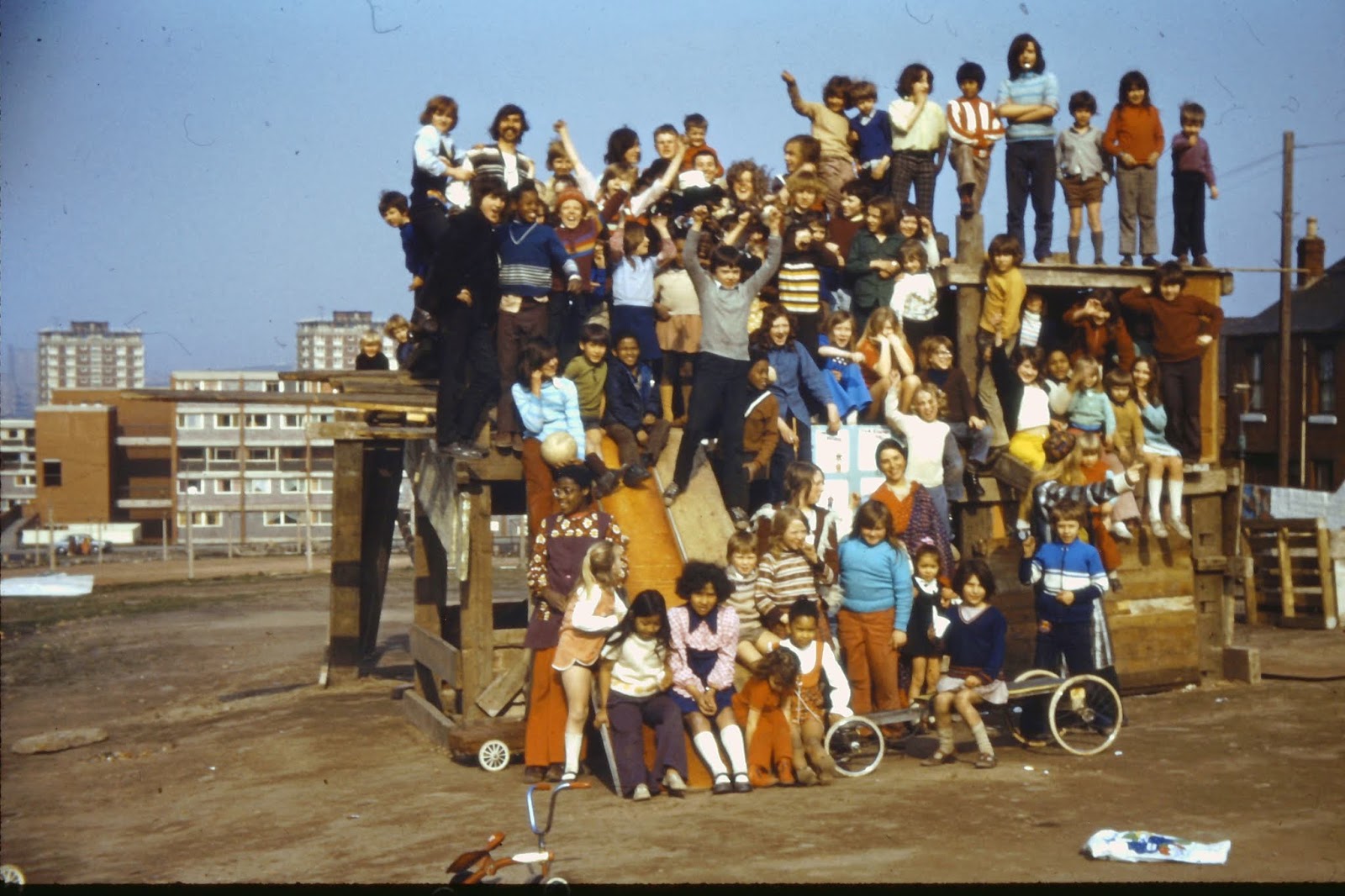
At least two weeks since I last posted and really no excuse other than the end of the world. I'm not sure what to say really other than we are locked down and in the house for at least 3 weeks. I had managed to avoid thinking about it for a week as I kept busy at the playground doing odd jobs and fixing stuff with Peter and chatting to Patrick.
On Thursday I got told my field work could not continue if its face to face. All this made me think was how strange it was that my voluntary work only became research when I sat and wrote field notes about it - this was the only thing that made it research, the turning it into text. But now its all finished put on hold for probably longer than we all think.
We are all moving apart and coming together. We- that is my generation have never known anything like this so we can't be of that much help.
I am, if I'm honest finding it hard to focus and feeling frustrated I can't seem to get more done - its like a missed opportunity to knuckle down - but we feel how we feel and we think how we think.
I am setting myself a task to
1. Read Karen Barad meeting the universe half way - to brush up on my new materialism and I find her easy to read. I like the fact I have a set of notes on books it reminds me I have actually read them.
2. I am writing and thinking with Kate - this feels like a nice connection we are helping each other have a professional life - I am trying to get her to read what is philosophy - she won't though.
3. I am going to have a practical day tomorrow i have a list of practical jobs to do. I started the week saying i would do two days on my PhD study - I have done this but the achievements are small - I hope they are incremental.
4. Note to self - don't beat myself up its strange and stressful and the main thing is to look after everyone.
This post feels like the video recording that the captain of the star ship leaves and is found on the empty ship by the group of new arrivals that have know idea what happened to the crew.Then the aliens come.
Monday, March 9, 2020
Where is the work? its actually about art.
Monday Blog post time. I've had two weeks with little else to do but think about my PhD. I have moved passed the RD2 crises and vaguely forgotten about new materialism. I have written 5000 words which is really a stream of consciousness that in trying not to repeat itself, repeats itself. I have just read it and in some ways within the drivel it maps out an area of theory that tries to think about what art means within what I'm going to call my study. I seem to have avoided reading any critical literature from a contemporary art perspective. I'm pretty happy with this as it's what I need at the moment- to take back a little bit of the territory of art for myself - this is also what I notice I do on my projects.
I had a very short phone supervision with Kate on Friday as MMU would not let me in due to Covad 19 virus. I told Kate that I felt I was getting distracted by the history and theory of Adventure play including loose parts approaches and that this had never been the focus of the PhD. I said I needed to pull back to the idea of residency and foreground art.
There is obviously a problem here in that if I'm suggesting that residency is a mode of enquirer or knowledge production then it may need to have an area of inquiry other than itself. Of course I now know that this establishes a binary or duality that may not be useful but it still feels that without an area of exploration that sits outside the exploration of what it means to be in residence then everything gets circular and inward looking- its not a method its just a residency.
Regardless of this concern I need to be clear that my PhD is not about adventure play or early literacy - it just happens to be located in two residencies within these spaces of enquirey. The settings are part of a broader assemblage they are not the objects of study.
Can a new materialist approach or lens afford a way to explore the artists residency in a way that will add to understanding and create new knowledge? So practically am I working through some stuff that could free up the fixed definitions of what residency is and what art can do within research and within the world. This desire feels like a worthwhile and consistent trace through my practice, It is one of the threads that the PhD has put under tension. In some way preventing me taking for granted some of the givens that allow the practice to continue as a practice. What I tried to explain to Abi as the artists 'secret plan' that even they don't really know about, only that it exists and it determines actions. Its interesting getting a little distance with the work with Abi as I can see the tiny parts of art falling out of the project. Some of the bits of art make me feel like a fool, they seem pointless, some feel like a joke, like I'm not being serious or been taken seriously but mostly in retrospect they feel OK.
I think this will happen with the adventure playground work - at the moment it doesn't feel much like art or much like a residency - its not located and the theory aspect of my life drops me into a bit of a muddle- I feel like I'm playing some sort of serious game of catch up - mainly with myself.
Is their a crux here? something that revolves around the nature of art and what it means - a really practical question about whether we need it and if it does anything. Is art transcendental in its nature? its essence? is any attempt to locate it materially a case of defusing its potency or agentive qualities. If so then is the best solution to trundle on in constructed oxymoronic ignorance. I can see the points of art and practice as they emmerge - I can identify them as I look back and I can see where the things I'm doing do not conform to the secret plan or emerge as art. This then must be some sort of progress - not really to share with anyone but at least to give myself a bit of a handhold for taking a breath.
Subscribe to:
Posts (Atom)